GOTO Exchange - 3
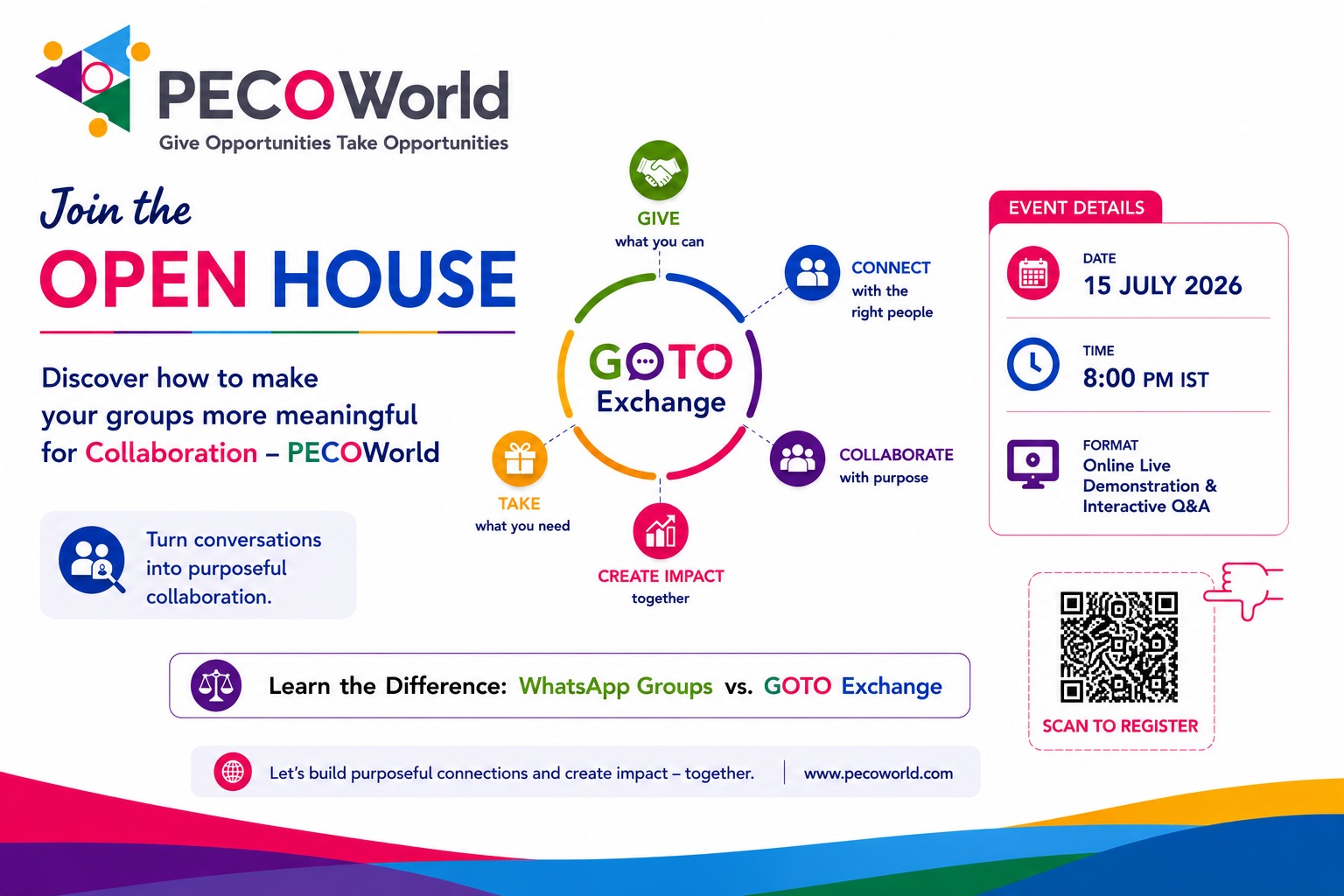
Transitioning 17 years of offline partnership-building into a scalable, AI-powered digital ecosystem requires more than just new software; it requires a new methodology. Led by Karon Shaiva (Karon Shaiva Chief Impact Officer, IDOBRO Impact Solutions), this session detailed how the PECOWorld platform solves severe collaboration inefficiencies across civic, corporate, and community sectors. The core thesis: static impact reports and unorganized chat groups must evolve into transparent, real-time matchmaking networks to drive genuine systemic change. "Just creating static impact assessment reports is not true transparency. We all know that. PECOWorld is built to show real-time, ground-level collaboration." For nearly two decades, building multi-stakeholder partnerships required heavy manual networking, often resulting in slow deployment and localized silos. In this launch session, Karon Shaiva outlined the official transition of a heavily tested, 17-year-old offline model into the digital PECOWorld ecosystem. By leveraging modern AI and structured digital frameworks, the platform aims to eliminate the friction that typically plagues civic and corporate collaborations, turning fragmented intent into coordinated, trackable action. The Core Vision: Four Strategic Use Cases The PECOWorld platform and its underlying model are engineered to solve specific operational bottlenecks across four distinct sectors: Gov-Citizen Initiatives: Municipalities and residents often struggle with the poor execution and communication of civic policies. The platform provides a direct, structured digital interface for joint public-private projects, bridging the gap between state intent and citizen reality. Citizen Collective Action: Grassroots groups typically rely almost entirely on unorganized WhatsApp chats, leading to lost data, zero accountability, and rapid volunteer burnout. PECOWorld offers structured project tracking and resource mapping backed by platform support. Alumni Networks: Educational institutions frequently limit alumni engagement to transactional, purely financial fundraising. The platform maps alumni capabilities to build deep, value-driven relationships that go beyond the wallet. Next-Gen CSR: Corporate Social Responsibility (CSR) teams often suffer from low visibility and "paper-only" accountability. PECOWorld serves as a public-facing portal that makes CSR projects transparent, visible, and highly collaborative for external stakeholders. The Three Pillars of Implementation Support To ensure users successfully transition from theoretical interest to active implementation, Shaiva announced that the parent organization will back new users with three core resources: The AI-Driven Tech Platform: Developed and refined over 17 years—and stress-tested during the pandemic with UNICEF to track a disaster-response network of 240 partners down to the village level—the platform now integrates AI. This makes multi-stakeholder capability mapping and matchmaking highly scalable and affordable, bypassing previously prohibitive coordination costs. Knowledge and The KORU Toolkit: Any user launching a thematic network (PECONet) or a smaller working group (PECOCircle) receives direct handholding. Users gain access to the specialized KORU Toolkit—a set of step-by-step methodologies detailing exactly how to build, maintain, and sustain collaborative coalitions. Activating the Network: The platform digitizes years of manual networking. If a user posts a "Take" (a request for a specific resource, such as a physical space or a specialized skill), the platform owners actively leverage their extensive physical network to fulfill that match. Real-Time "Gives" & "Takes": The Live Exchange The GOTO session did not just discuss collaboration; it functioned as a live matchmaking marketplace. Senior corporate coaches within the network stepped forward to volunteer executive coaching time for social entrepreneurs. Simultaneously, participants actively tested the system—Nisha successfully uploaded the platform's first official "gift" (resource offer) live on the call, while plans were set to launch a Bangalore Chapter PECONet spearheaded by Subhash Panicker to focus on localized senior citizen support. To sustain this momentum, the group established a bi-weekly operational sprint. Participants are tasked with logging into the portal, experimenting with offers, and compiling UX feedback before the next session, which will focus entirely on Stakeholder Mapping. Additionally, the development team proved the platform's agility: based on immediate user feedback during the call, Ankush Singh and the tech team added UI upgrades to the development queue to increase support visibility and introduced an opt-in "success story" tracking feature to help promote highly active coalitions.