
Partnerships That Shift Power
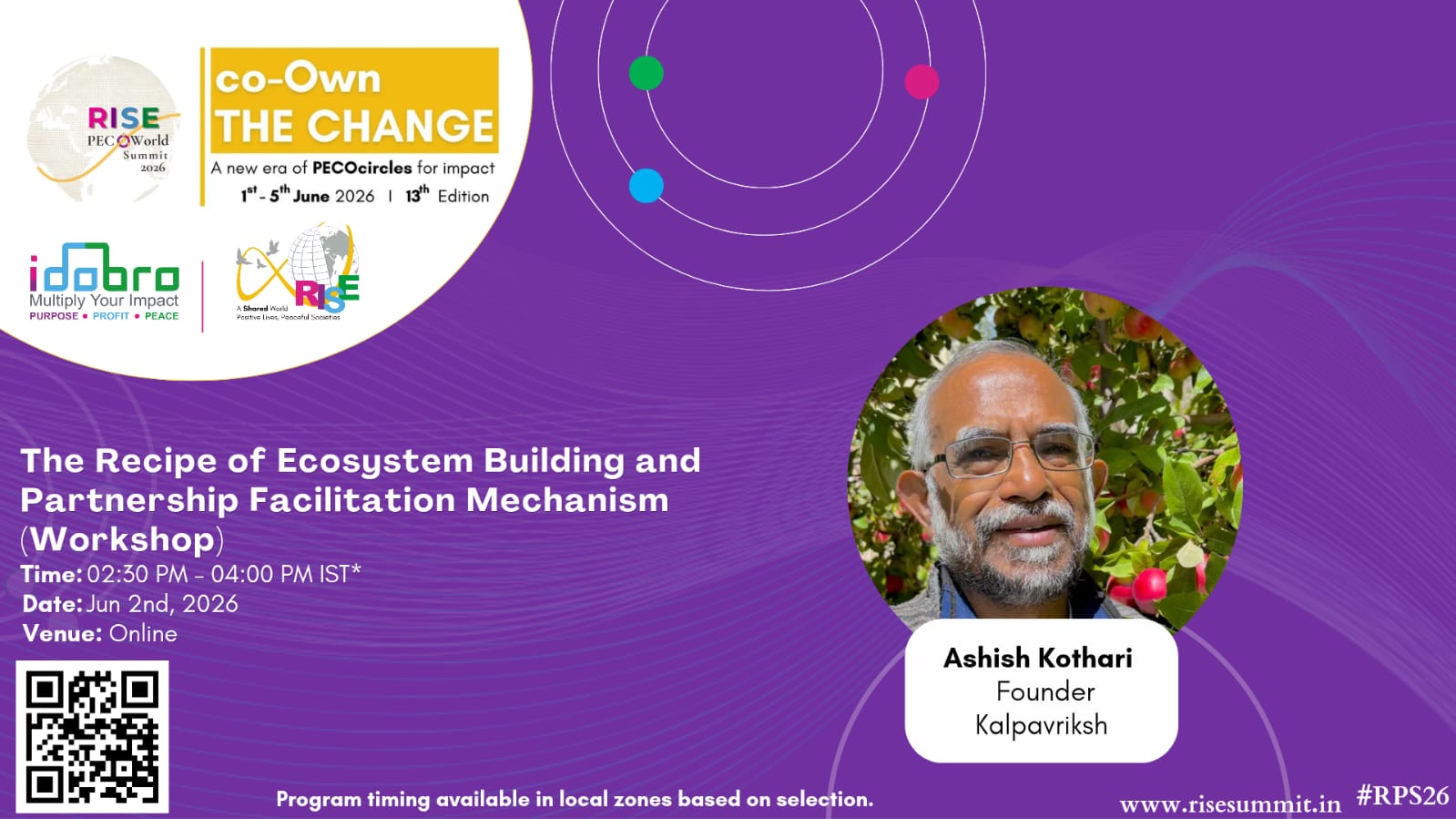
The Recipe of Ecosystem Building and Partnership Facilitation Mechanism
Key insight
A field note on ecosystem building as a practice of shifting power, widening knowledge, and turning partnerships into conditions for ownership.
Linked summit sessions
Ecosystem building is often described in the language of alignment: bring actors together, coordinate roles, mobilize funding, define outcomes and scale what works. These are necessary tasks, but they are not enough.
A deeper question sits underneath every partnership: who defines development, whose knowledge counts, who owns the process and who benefits from the outcome?
Partnerships can become efficient without becoming just. The real test is whether they shift power.
Beyond the Mechanics of Collaboration
The fireside frame around ecosystem building and partnership facilitation invites us to move beyond delivery alone. It asks whether ecosystems can be designed for ecological balance, justice, shared ownership and community agency.
Many development efforts still begin with institutions deciding the agenda and communities being invited later as participants, beneficiaries or data sources. A transformative ecosystem reverses that order.
When Success Is Too Narrow
The critique of dominant development is not simply that projects fail. It is that the idea of success itself is often too narrow. Growth, scale, visibility and speed can hide ecological extraction, centralized control, social inequality and the quiet displacement of local knowledge.
A project may meet its indicators and still weaken the relationships, commons and community capacity that make long-term well-being possible.
A Different Imagination
Alternatives such as Eco-swaraj and Radical Ecological Democracy place ecological integrity, social justice, direct democracy, economic democracy and cultural diversity in the same frame. Well-being is not reduced to income or consumption.
- Communities govern resources with dignity and accountability.
- Knowledge traditions are protected instead of treated as raw material.
- Nature is understood as a living base, not only an input.
- Partnerships become spaces for shared responsibility.
From Conference to Confluence
A confluence is different from a conference. A conference can be built around speakers, panels and visibility. A confluence must be built around relationship, listening and shared agenda-setting.
It asks who is missing, who is carrying risk without voice, who is providing legitimacy, and who may be extracting stories or data without shifting power.
The Question Before Partnership
The practical lesson for ecosystem builders is clear. Before entering any partnership, ask whether the partnership will only improve delivery or whether it will deepen ownership. The recipe is not just to connect actors. It is to change relationships: with power, with nature, with community and with the future.