
Fashion for All: Designing for Dignity, Function and Belonging
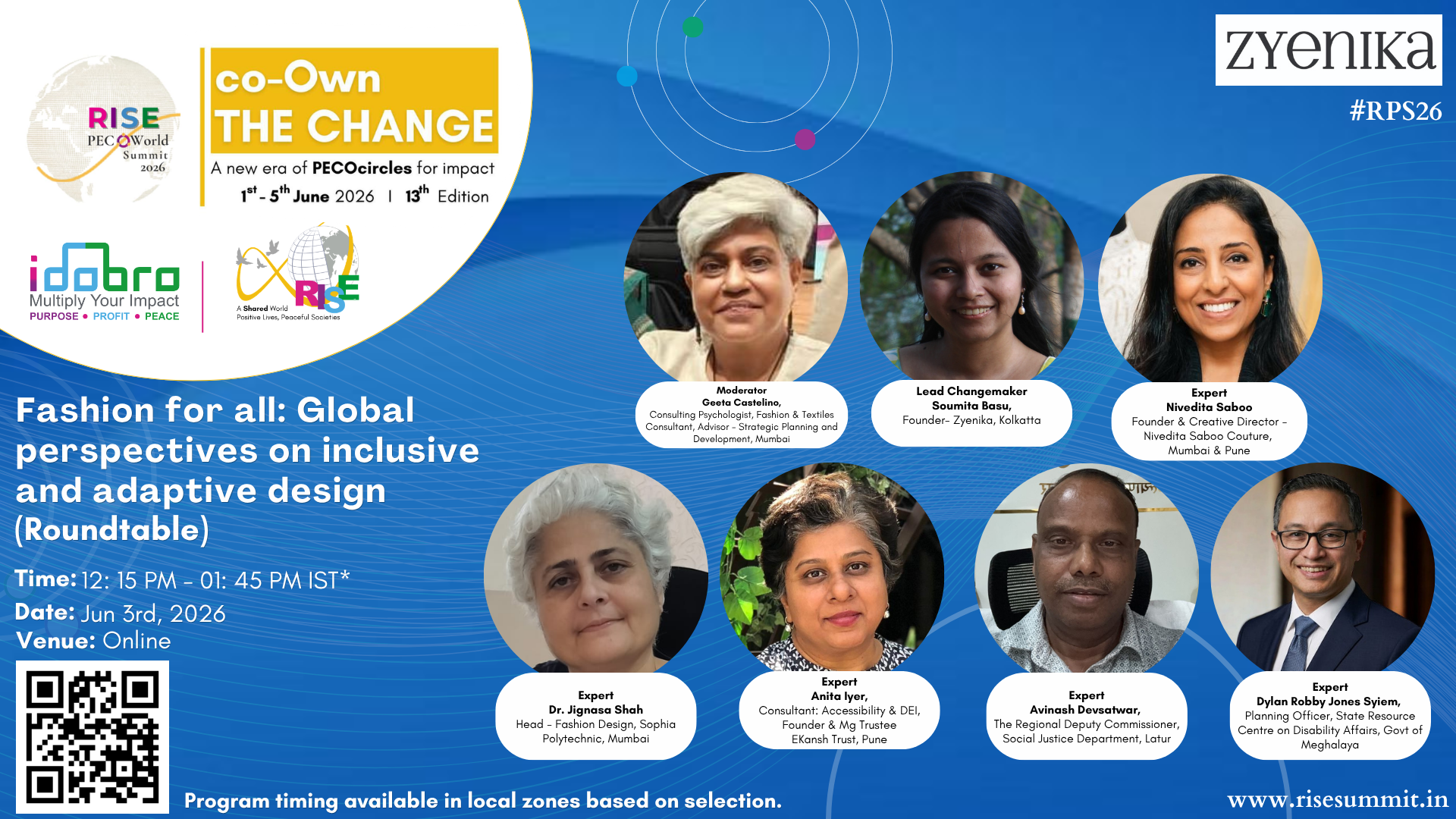
Fashion for all: Global perspectives on inclusive and adaptive design
Key insight
A roundtable on inclusive and adaptive fashion as a field where design, entrepreneurship and dignity meet, especially for persons with disabilities, senior citizens and people with changing bodies.
Linked summit sessions
Fashion is often treated as expression, beauty and identity. This roundtable asked participants to stretch that understanding: what happens when fashion also becomes a question of access, independence and dignity? Inclusive and adaptive design begins from bodies and lives that mainstream fashion routinely ignores — persons with disabilities, senior citizens, people recovering from injury, caregivers, and anyone whose mobility, comfort or sensory needs do not fit standard patterns.
The conversation moved beyond sympathy into design intelligence. Adaptive fashion is not a charity add-on; it is a serious entrepreneurial and creative field. A garment may need to reduce pain, shorten dressing time, support assisted dressing, hide or accommodate medical devices, improve confidence, and still look desirable. The design challenge is therefore both functional and emotional. Clothes are not only worn on the body; they affect how people enter public life.
A powerful theme was co-creation. Designers cannot solve for inclusion from a distance. They must work with users, caregivers, medical realities, educators, manufacturers and young designers who are willing to learn differently. The session also pointed to gaps in fashion education. Many students are not exposed to adaptive clothing as a mainstream discipline, yet once they encounter it, they begin to see bodies, patterns, fasteners, fabrics and dignity in new ways.
What to carry forward
- Adaptive fashion is a design and dignity challenge, not a side category.
- Co-creation with users and caregivers is essential for real usability.
- Entrepreneurs must build awareness along with products and distribution.
The market question matters too. Inclusive fashion needs visibility, affordability, distribution and trust. Families looking after elderly parents may not even know such options exist. People with disabilities may have learned to accept poor choices because the market has rarely addressed them. Entrepreneurs in this space therefore have to create both product and awareness.
For PECOWorld, the session offers a strong example of entrepreneurship rooted in the 3Cs. The cause is inclusion and independent living. The community includes people with disabilities, elders, caregivers and design learners. The county can be local, national or global, because the need travels across contexts while solutions must adapt to culture and climate. Fashion for all is ultimately not a niche; it is a reminder that good design widens the world.