
Beyond MSME: Why Purpose Must Sit Beside Size
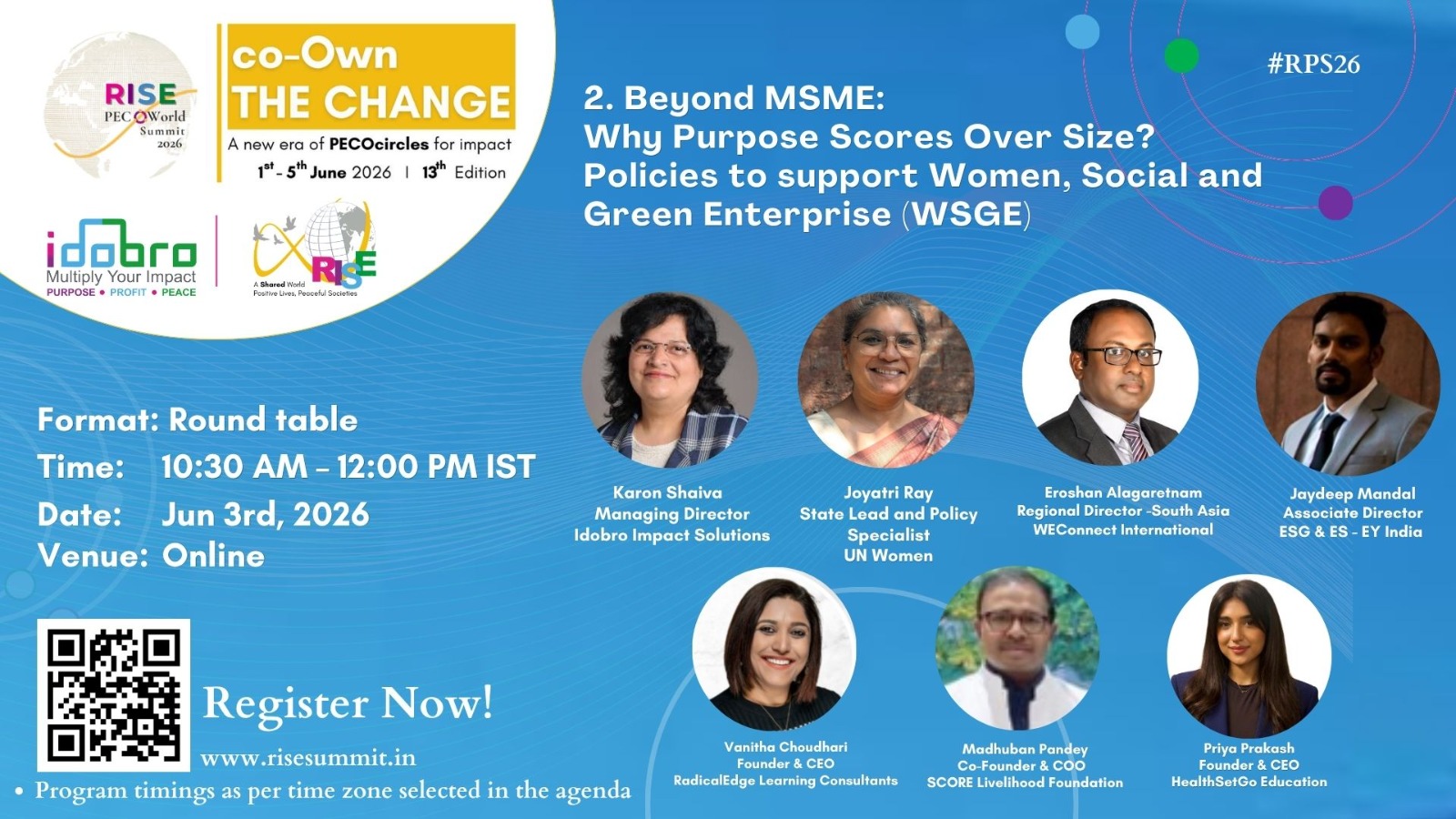
The Beyond Series 2. Beyond MSME: Why Purpose Scores Over Size? Policies to support Women, Social and Green Enterprise (WSGE)
Key insight
A policy and ecosystem conversation on why women, social and green enterprises need recognition, procurement access and support systems that value impact alongside economic scale.
Linked summit sessions
The Beyond MSME session challenged one of the most familiar ways in which enterprise is classified: by size. Micro, small and medium categories help governments and institutions organise support, but they often miss what matters most in women-led, social and green enterprise. Many such businesses are not only commercial units; they are vehicles for dignity, livelihood, climate action, inclusion and local resilience.
The discussion brought together ecosystem leaders and entrepreneurs to ask what changes when we evaluate an enterprise by the value it creates rather than the volume it has already achieved. Women-owned businesses, for instance, may be creating deep community impact while remaining relatively small. Social enterprises may carry high public value without fitting cleanly into either charity or commerce. Green enterprises may be solving long-term environmental problems before markets fully price those benefits.
A central thread was market access. Purpose-led enterprises cannot survive on appreciation alone. They need procurement pathways, buyer confidence, certification, visibility and fair opportunities to compete. Platforms and networks become important here because they help connect entrepreneurs to buyers, investors, mentors, governments and peer communities. The question is not whether these enterprises are ready for markets, but how markets can be made more ready to recognise them.
What to carry forward
- Purpose-led enterprises need procurement and policy pathways, not only praise.
- Women, social and green enterprises require metrics that include impact, ownership and ecological value.
- Networks can reduce founder isolation by connecting markets, mentors and peers.
The session also surfaced the loneliness of entrepreneurship. Purpose-led founders often carry extra burdens: proving impact, educating customers, navigating policy, finding working capital, and building credibility in sectors that may not yet understand them. Support therefore needs to include mentoring, storytelling, compliance guidance, data, and spaces where entrepreneurs can learn from one another without feeling isolated.
The policy implication is clear. If MSME support continues to look only at size, it will miss enterprises that are small in revenue but large in relevance. A WSGE lens asks institutions to notice ownership, purpose, community outcomes and ecological value. It does not replace financial discipline; it expands the dashboard. For PECOWorld, this becomes a practical invitation: make the enterprise’s cause, community and county visible, then build collaborations around that clarity.