Wealth That Survives the Next Generation
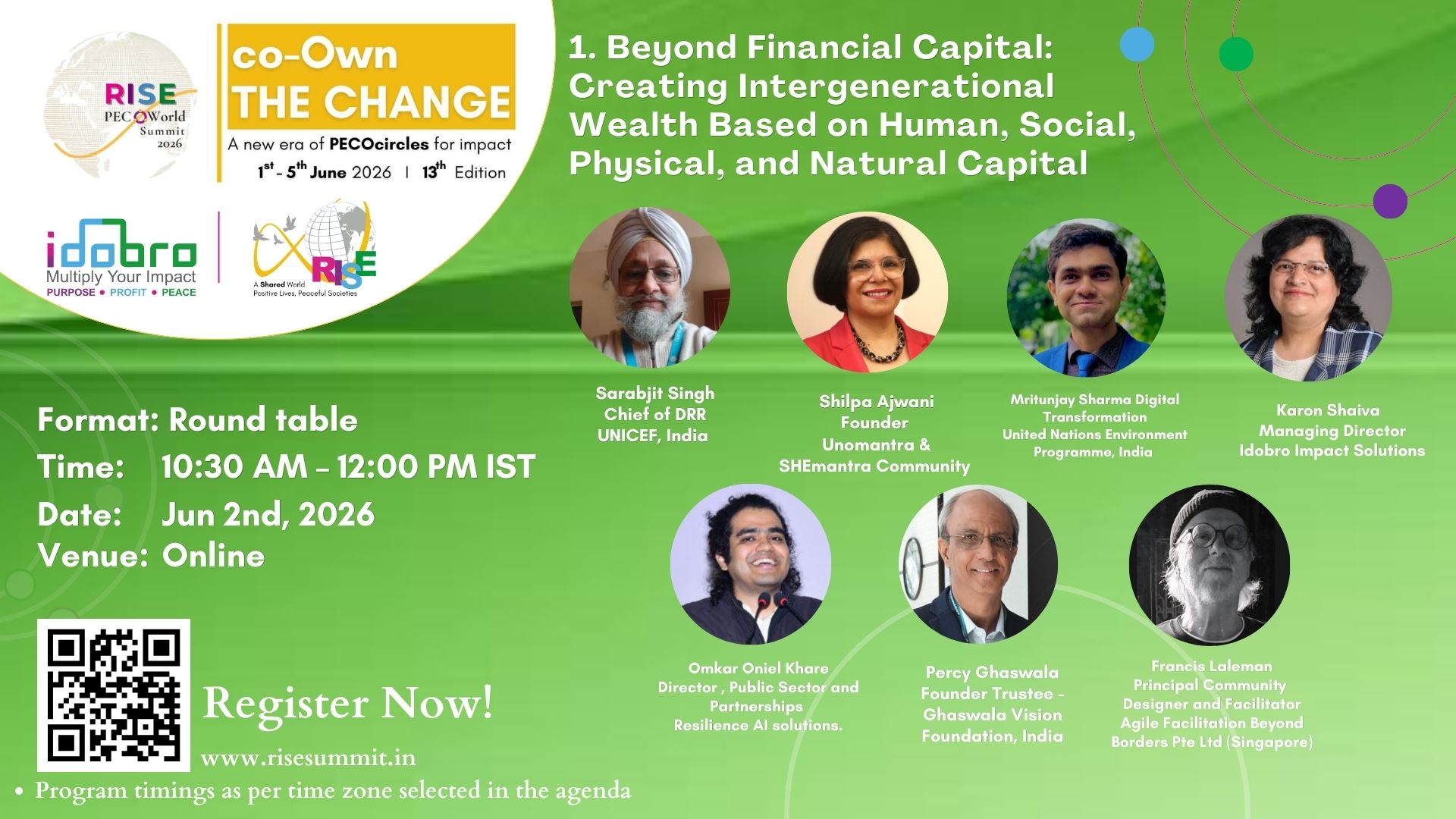
Beyond Financial Capital: Creating Intergenerational Wealth Based on Human, Social, Physical, and Natural Capital
Key insight
A synthesis of the opening conversation on wealth beyond money, and why governance, capability, ethics and connection matter for intergenerational resilience.
Linked summit sessions
The opening plenary began with a necessary correction to the way we usually speak about wealth. When people hear the phrase intergenerational wealth, the mind quickly moves toward land, savings, investments, institutions and material assets. The session asked participants to widen that lens. Material wealth matters, but by itself it is fragile. Disasters can destroy it. Poor governance can dissipate it. A generation can inherit abundance without inheriting responsibility. If wealth is to travel across time, it needs a living architecture around it.
That architecture was described not as red tape, but as care. Governance, in this framing, is not merely a compliance system. It is the discipline that protects value from being captured, wasted or made brittle. At the macro level, governance creates predictability, equity and institutional stability. At the micro level, it becomes self-governance: the habits, ethics and internal discipline that allow people and communities to use resources without exhausting them. The session made an important distinction here. A society can have structures without stewardship, and individuals can have assets without the character to hold them well.
The conversation then moved into the forms of capital that are often invisible until they fail. Human capital is not only education or credentials. It is capability, health, judgement and the ability to act in difficult conditions. Social capital is not networking for advantage. It is trust, reciprocity and the willingness to collaborate before crisis forces collaboration. Natural capital is not scenery or raw material. It is the living base that keeps food, water, health and climate systems possible. Physical capital is useful only when it is held within this wider ecology.
A recurring idea was that intergenerational wealth must answer one question: are we extracting value from future generations, or creating value for them? This question shifts the conversation from possession to responsibility. It asks whether our decisions increase the resilience of those who come after us, or merely transfer risk to them. It also challenges philanthropy and social impact work to avoid prestige-led partnerships that ignore smaller actors with deep field knowledge.
This is where the session became especially relevant for a summit on co-ownership. If wealth is understood only as what one generation hands to the next, then inheritance remains private. If wealth is understood as the capacity of a community to keep regenerating value, then inheritance becomes civic, ecological and relational. It asks each actor to become a steward, not only a beneficiary.
The strongest practical lesson from the session was that value creation requires ethics, expertise and connection together. Expertise without ethics can deplete value. Ethics without capability may remain intention. Connection without accountability can become noise. But when these three come together, wealth becomes more than accumulated resource. It becomes a capacity to protect dignity, restore possibility and keep communities alive through uncertainty.
For PECOWorld, this is the first bridge from summit conversation to platform action. The platform cannot treat participants as attendees alone. It has to help them declare what they can contribute, what they need, where they belong and what they are willing to co-own. That is how capital begins to move from private possession to shared resilience.