
Closing the Loop: AI, Philanthropy and the Proof of Change
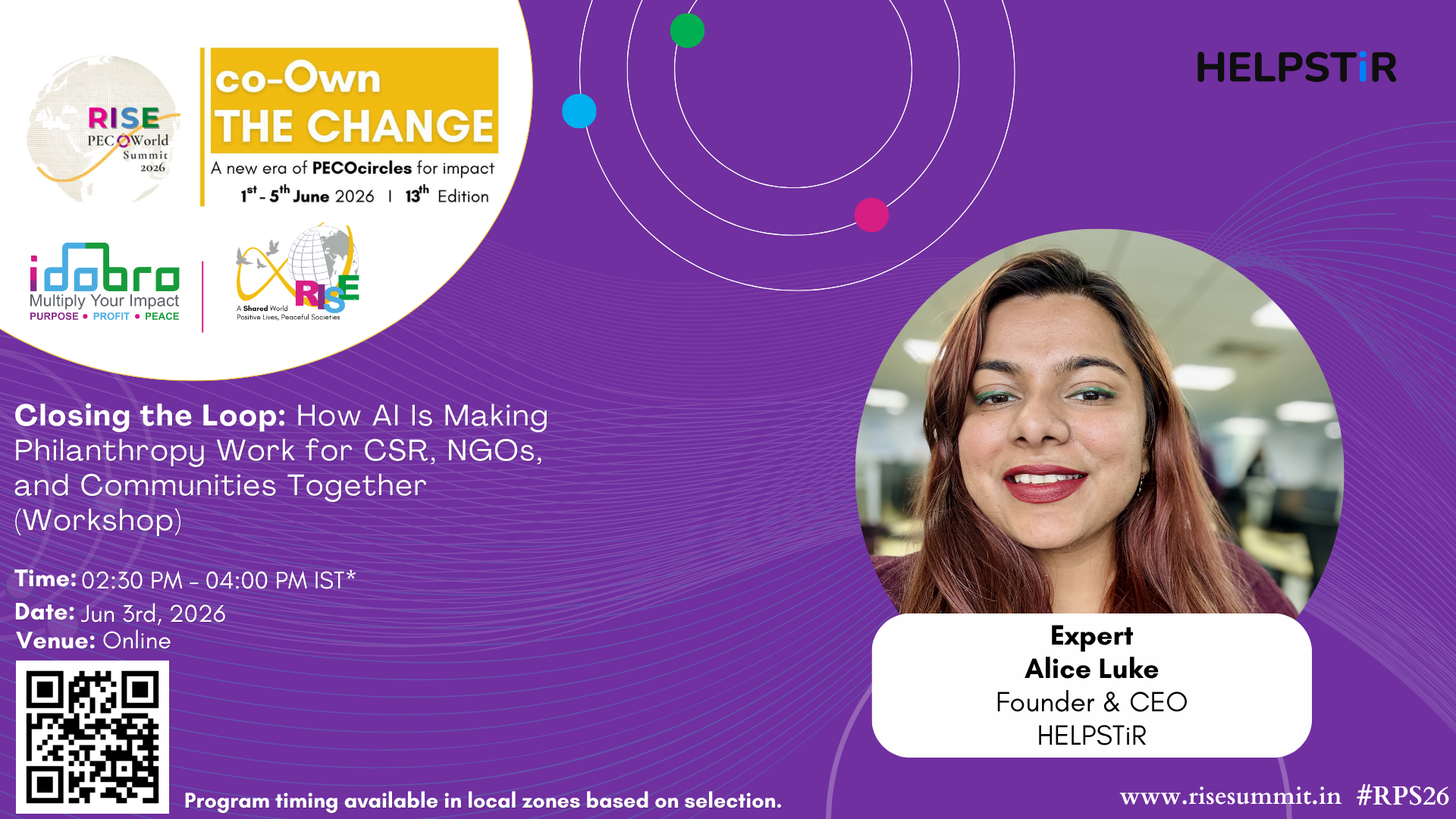
Closing the Loop: How AI Is Making Philanthropy Work for CSR, NGOs, and Communities Together
Key insight
A practical conversation on how AI can help CSR, NGOs, funders and communities move from scattered activity to clearer evidence, better decisions and more accountable collaboration.
Linked summit sessions
The session on AI and philanthropy began with a practical problem that everyone in the social impact ecosystem recognises: activity is everywhere, but evidence is scattered. CSR teams, NGOs, funders and communities often work with different reporting formats, different timelines and different definitions of success. AI can help close this loop if it is used to make information more useful, not simply more impressive.
The discussion positioned AI as a tool for sense-making. It can support monitoring, summarise field inputs, detect patterns, compare progress across locations, and help organisations tell a clearer story of outcomes. For funders, this means better visibility into what their support is enabling. For NGOs, it can reduce the burden of repetitive reporting and help them turn raw data into insight. For communities, it can make their experience harder to ignore when decisions are being made.
At the same time, the conversation did not treat AI as magic. Ethics, bias, gender sensitivity, consent, privacy and accountability remain central. If data is incomplete or extractive, AI will amplify the problem. If technology is imposed without community understanding, it may create distance instead of trust. The session therefore called for responsible adoption: start with the problem, define the users, respect the context, and keep humans accountable for decisions.
What to carry forward
- AI is most useful when it turns scattered activity into actionable evidence.
- Responsible adoption requires ethics, consent, bias checks and human accountability.
- Impact data should help funders, NGOs and communities make better decisions together.
One important idea was that philanthropy is no longer limited to grants for nonprofits. There is growing interest in supporting social enterprises and hybrid models that can create both impact and sustainability. AI can help this shift by making impact more legible to different kinds of capital, but only if the metrics remain meaningful. Numbers should support judgement, not replace it.
For PECOWorld, this session connects directly to the platform’s larger promise. The more clearly people can express cause, community, county, commitments and outcomes, the easier it becomes to match needs with resources and prove what changed. AI can eventually support that architecture, but the heart of the loop remains relational: CSR, NGOs, entrepreneurs and communities working with shared visibility and shared responsibility.